|
|
|
|
 |
Sir John Gielgud "John Gielgud can steal a scene by simply wearing a hat" - Pauline Kael
FILMOGRAPHY (ONLY REVIEWED ENTRIES)
Til tross for at Gielgud har spilt i godt over 100 filmproduksjoner, var han i sine yngste år mest å finne på teaterscener rundt om kring i hjemlandet England. Med skuespillerblod i flere generasjoner bak seg, debuterte den 17-årige Gielgud på scenen i 1921, og vokste snart til å bli en hovedattraksjon. Opp gjennom årene har han oftest spilt ulike Shakespeare-rollefigurer; Romeo, Richard II, Macbeth, Prospero og Antony. Den rollen Gielgud dog hadde ytterst i fingertuppene var Hamlet. Han opptrådte for første gang som denne skikkelsen i 1930, og gjorde Hamlet over 500 (!) ganger i løpet av karrieren. Han er ansett som den kanskje beste tolkeren gjennom tidene av denne rollen. Gielgud gjorde sin filmdebut allerede i 1924, men han var bare sporadisk å finne i filmproduksjoner frem mot 50-tallet. Han har alltid vært en teaterets mann, men senere i karrieren ble han stadig oftere å finne på i filmer og TV-produksjoner. Han var faktisk aller mest aktiv her i sine siste tiår. Få kan se tilbake på en merittliste som Gielguds når det gjelder filminnspillinger i høy alder. I 1996 - året han fylte 92 år - spilte Gielgud inn syv film- og TV-produksjoner. Å hvile på laurbærene var absolutt ikke interessant.
70-tallet var Gielguds utvilsomt mest produktive tiår, med en rekke glimrende roller. Men også på 90-tallet har han stått frem med en rekke fremragende forestillinger, senest i Oscar-nominerte Elizabeth (1998) (se bilde til høyre), men før dette i en eksepsjonell rolle som gammel musikklærer i Scott Hicks mesterverk Shine (1996). Som 90-åring, fikk han et teater i London oppkalt etter seg. De siste 25 årene av sitt liv, bodde Gielgud sammen med sin partner, østerrikeren Martin Hensler, men han ønsket ikke å kommentere saker angående homofili.
"(...) and Gielgud is equally humorous and surprising." - Leonard Maltin on The Good Companions. "(...) but John Gielgud's refined, monkish Henry IV gives the film the austerity it needs for the conflict within Hal to be dramatized." - Pauline Kael on Chimes at Midnight. "(...) a London-set romantic thriller about espionage that's tolerably amusing whenever John Gielgud is on the screen demonstrating his flair for self-parody." - Pauline Kael on Sebastian. "(...) Arthur turns for help to his loyal butler, Hobson, who is played by John Gielgud with an understated elegance and a naughty tongue." - Roger Ebert on Arthur. "John Gielgud can steal a scene by simply wearing a hat; it's so crisply angled that you can't take your eyes off him—you want to applaud that perfect hat. As Hobson, the valet to a drunken millionaire playboy, he may be the most poised and confident funnyman you'll ever see." - Pauline Kael on Arthur. "Gielgud is a particular delight as aging career diplomat" - Leonard Maltin on Plenty. "John Gielgud has three brief scenes and steals them all." - Roger Ebert on Plenty. "(...) on the sound track we hear one of the great voices in theater history, Sir John Gielgud's." - Roger Ebert on Prospero's Books.
"Sir John Gielgud at 86, in a virtuoso performance as a most regal Prospero, the master manipulator of people and events, is a wonder. Age has not withered him. It's his film all the way. Mellifluously, resonantly speaking some of the most famous lines in the history of theater, Gielgud functions as a sort of onscreen chorus—an intermediary between the action and audience to give form and fabric to the film. Throughout, Gielgud also portrays the Bard who, like the veteran actor himself, is nearing the end of his long career. (The Tempest was Shakespeare's 36th and final play.) In a triple conceit of Greenaway's, we see Gielgud-Shakespeare-Prospero writing the play in elegant Elizabethan script. Concurrently, he conjures onscreen the images and characters he has just created on paper. He recites all their dialogue. Their voices are dimly overlaid with his, as if by echo. Only at the film's very end, when Prospero has given up all thoughts of revenge and reconciled with his enemies, are the other characters allowed to speak for themselves in their own voices. Symbolically, as revenge made them fictional, so forgiveness makes them real. "And I enjoyed John Gielgud, in yet another of the farewell performances we have come to treasure."
- Roger Ebert on First Knight.
"It's like visiting other planets" - om å spille i film og TV-produksjoner. "Like all professions acting has terrible drawbacks.It can be fearfully boring, fearfully unglamorous...But what is fun about the theatre is that We get our prizes while We are alive to enjoy them.We have the pleasure of the audience's reaction, We have the applause, We have the publicity, We have the tribute and the honours and whatever it may be.Much more than We probably deserve." "I also did a film called Providence for Alain Resnais which I thought was rather successful. I enjoyed Brideshead Revisited very much and also Prospero's Books, although it was very exhausting. Those three films are the ones I would say I'm most pleased with. Arthur was also great fun and came at a time in my life when I really didn't imagine that I would be wanted for a leading role. And what luck! I got my Academy Award for that." Etter at Gielgud hadde gjort Julius Caesar med Marlon Brando i 1953, var engelskmannen blitt så imponert over det unge amerikanske talentet, at han inviterte ham over til London for å spille sammen med Gielgud og andre respekterte Shakespeare-skuespillere på scenen. Brando avslo høflig, fordi han måtte reise til Bahamas og dykke...
Arthur Arthur:
"Do you know what I'm going to do? I'm going to take a bath." Shine Cecil Parkes (Gielgud):
"The page, for god's sake! The notes!" Cecil Parkes (Gielgud): "Don't you just love those big, fat chords. You've got to tame the piano, David, or it will get away from you. It's a monster. Tame it, or it will swallow you whole!" Cecil Parkes (Gielgud): "And you must play... as if there was no tomorrow"
|
|||||||||||||||||||||||||||||||||||||||||||||||||||||||||||||||||||||||||||||||||||||||||||||
 |










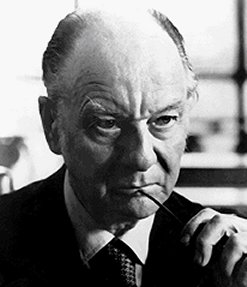

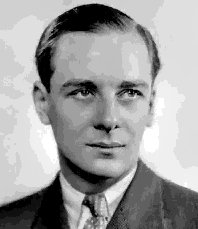 John
Gielguds eksepsjonelle karriere strekker seg over nærmere 80 år. Hans
ubestridte talent har blomstret på teaterscener, TV-produksjoner og på
lerretet fra starten av 20-årene og til det helt sene 90-tallet. Da
Gielgud døde, 22. mai 2000, hadde han arbeidet inntil nylig og hans
død var en naturlig, udramatisk død. En av 1900-tallets aller største
skuespillertalenter gikk dermed bort.
John
Gielguds eksepsjonelle karriere strekker seg over nærmere 80 år. Hans
ubestridte talent har blomstret på teaterscener, TV-produksjoner og på
lerretet fra starten av 20-årene og til det helt sene 90-tallet. Da
Gielgud døde, 22. mai 2000, hadde han arbeidet inntil nylig og hans
død var en naturlig, udramatisk død. En av 1900-tallets aller største
skuespillertalenter gikk dermed bort.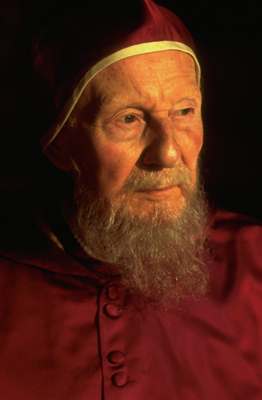 Mye
på grunn av at Gielgud i stor grad har holdt seg i sitt hjemland hva
filmproduksjon angår, er han ikke en regelmessig gjenganger i
Oscar-utdelingene. Dessverre ble det ei heller mange hovedroller i hans
filmkarriere - hvilket antakelig er et resultat av hans alder og
utseende. Dog vakker, var Gielgud uten de klassiske trekkene. Bare én
gang har han vært å finne som romantisk 'lead' i en film - i
Hitchcocks tidlige Secret Agent (1936). Men som
karakterskuespiller finnes en rekke storartede forestillinger. Til tross
for en ubestridt allsidighet, har Gielgud oftest bekledd roller som
vise, aristokratiske overklasse-herrer. Han fikk sin første
Oscar-nominasjon i 1964 som King Louis VII i Becket, og vant
Oscar-statuetten for beste birolle i 1981 mot Dudley Moore i Arthur.
Mye
på grunn av at Gielgud i stor grad har holdt seg i sitt hjemland hva
filmproduksjon angår, er han ikke en regelmessig gjenganger i
Oscar-utdelingene. Dessverre ble det ei heller mange hovedroller i hans
filmkarriere - hvilket antakelig er et resultat av hans alder og
utseende. Dog vakker, var Gielgud uten de klassiske trekkene. Bare én
gang har han vært å finne som romantisk 'lead' i en film - i
Hitchcocks tidlige Secret Agent (1936). Men som
karakterskuespiller finnes en rekke storartede forestillinger. Til tross
for en ubestridt allsidighet, har Gielgud oftest bekledd roller som
vise, aristokratiske overklasse-herrer. Han fikk sin første
Oscar-nominasjon i 1964 som King Louis VII i Becket, og vant
Oscar-statuetten for beste birolle i 1981 mot Dudley Moore i Arthur.
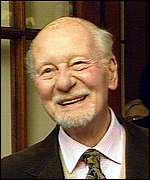 "When
you're my age, you just never risk being ill - because then everyone
says, 'Oh, he's done for.'" - som 84-åring.
"When
you're my age, you just never risk being ill - because then everyone
says, 'Oh, he's done for.'" - som 84-åring.